CLIMBING / TRAINING · 4 min read
How to ride Harlem Hill smarter
Pacing, gears, breathing, and repeatability. The fastest-looking start is rarely the best finish.
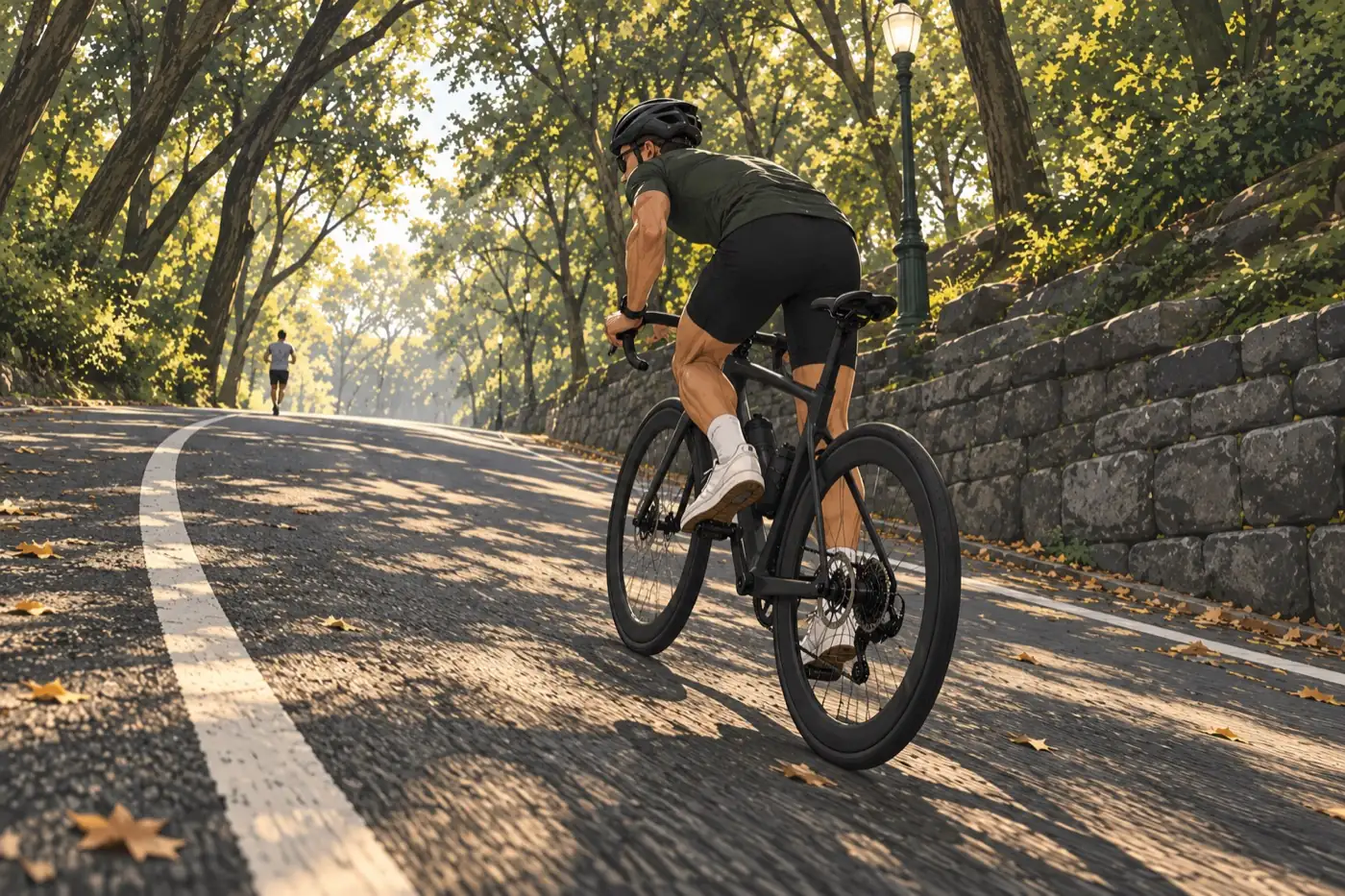
Harlem Hill has a way of making people ride the first part too hard. You feel strong, stand on the pedals, chase the rider ahead, and spend the rest of the climb trying to recover.
The better skill is knowing what you can hold: choosing a sensible effort early, finding a gear you can turn smoothly, and pacing the whole hill rather than just the first few seconds.
Think in effort, not ego
Before you reach the hill, decide what this attempt is for. A conversational endurance lap, a controlled hard interval, and a personal best require different efforts. If today is an easy day, don't let the hill turn it into an unplanned max effort.
Without a power meter, use breathing and perceived exertion. With a power meter, compare like-for-like attempts only when you have enough context: fatigue, wind, weather, traffic and how the effort was measured.
Shift before you need to
Ease into an easier gear before the pedals start bogging down. Shifting under enormous chain load is harder on the drivetrain and interrupts your rhythm. Keep your upper body relaxed and focus on a smooth, repeatable pedal stroke.
There is no universal ideal cadence. The right gear lets you pedal smoothly without grinding or spinning wildly. Use the bike and the cadence that work for you.
Use repeat efforts as information
- For a benchmark, use the same clearly defined segment and record the date, duration and how hard the attempt felt.
- If you have power data, note average power and the recording device. One Strava FTP estimate is not a lab measurement.
- Look at several comparable attempts rather than treating one windy or crowded lap as proof of progress.
- For intervals, recover sufficiently between repeats. More suffering doesn't automatically mean more useful training.
Don't turn the Park into a test track
Central Park is a public road environment, not a closed course. Stay within the posted rules, follow signs and signals, and stop for pedestrians at crossings. Abandon an interval if foot traffic, congestion or conditions make the effort unsafe.
Maximal fitness testing and high-speed technique drills belong on a trainer or in another suitable controlled setting, not in a busy public park.
Your next hill session
Try a steady, repeatable ascent on a normal ride. Note where your breathing begins to change, whether you selected a gear early enough and whether your effort increased unnecessarily in the opening section. Use those observations to make the next attempt more controlled.
If you want a training plan built around your riding time and current ability, coaching can combine this kind of on-bike observation with structured endurance and strength work.
The takeaway
Pick your effort before the climb, shift early, finish under control, and track progress over comparable rides.
Safety and park-use reference: Central Park Conservancy: current Drives safety guidance ↗. Follow the current posted signs and official guidance.
GALLICOACHES / GET FASTER
Want to practice it?
Work on this at your own pace with one-on-one coaching, in NYC or online. The initial intake is free and doesn’t book or charge you.